
Acts Chapter 1
Lessons from Acts Chapter 1: Preparing for Divine Empowerment
Welcome to a new post. This one will be a bit different than those in the past. Today we will explore biblical passages – recently I moved to the Seattle, WA area. And in doing this found a great church. On Wednesday’s I have started joining a women’s Bible Study which will go through the book of Acts over the next quarter. For accountability, I figured I may post some of what I have found or learned through the personal study we are expected to do every other day. Therefore, today, we will go through Acts Chapter 1, which is a pivotal bridge from Jesus’ earthly ministry to the birth of the early Church. We’ll build our discussion around three cornerstone principles:
- waiting in peace with eager expectation
- praying together
- natural leadership emerging
While our focus is primarily on Acts 1, I’ll weave in John 17:20-26—Jesus’ prayer for unity (prior to his death)—to highlight the theme of meeting together, as a church with other believers. Let’s uncover how this chapter models timeless steps for awakening divine power within us by receiving the Holy Spirit. Acts 1 can be thought of as a blueprint for spiritual preparation: after Jesus’ resurrection and ascension, the disciples are specifically told to wait before they start a church or even go out and tell everyone what they have witnessed.
Cornerstone 1: Waiting in Peace with Eager Expectation
At the heart of Acts 1 is Jesus’ command to the disciples: stay in Jerusalem and wait for the “promise of the Father”: the baptism with the Holy Spirit (Acts 1:4-5). The group was said to be 120 people of both men and women and the expectation is that they would be in fellowship of prayer and peaceful anticipation, gathering in the “upper room” (Acts 1:13) to prepare for the Baptism of the Holy Spirit. Jerusalem, symbolizing the “city of peace,” can represent an inner place of calm where we attune to divine timing. This waiting mirrors John 17:21-23, where Jesus prays for believers to be “one” as He is with the Father, perfected in unity to reveal God’s love. Just as the disciples waited about 10 days post-ascension for Pentecost’s outpouring (Acts 2), we learn to rest in higher awareness, expectantly opening to the Holy Spirit’s infilling. Without this prayerful pause, action could be coming from our human mind instead of divine power. Key events mentioned here include Jesus’ 40 days of post-resurrection teachings on the kingdom (Acts 1:3), His ascension from the Mount of Olives (Acts 1:9-12), and the angels’ promise of His return. These moments underscore preparation: the ascension lifts the Christ ideal (perfect divine consciousness) to a higher plane within us, veiled from material sight but ready to descend as inner guidance. In modern life, this could mean pausing before decisions or actions to pray in your “upper room” of elevated thought and listening to receive fresh inspiration or divine guidance. Have you ever rushed a decision only to regret it? Acts 1 reminds us: divine power flows when we wait with eager faith.
Cornerstone 2: Praying Together
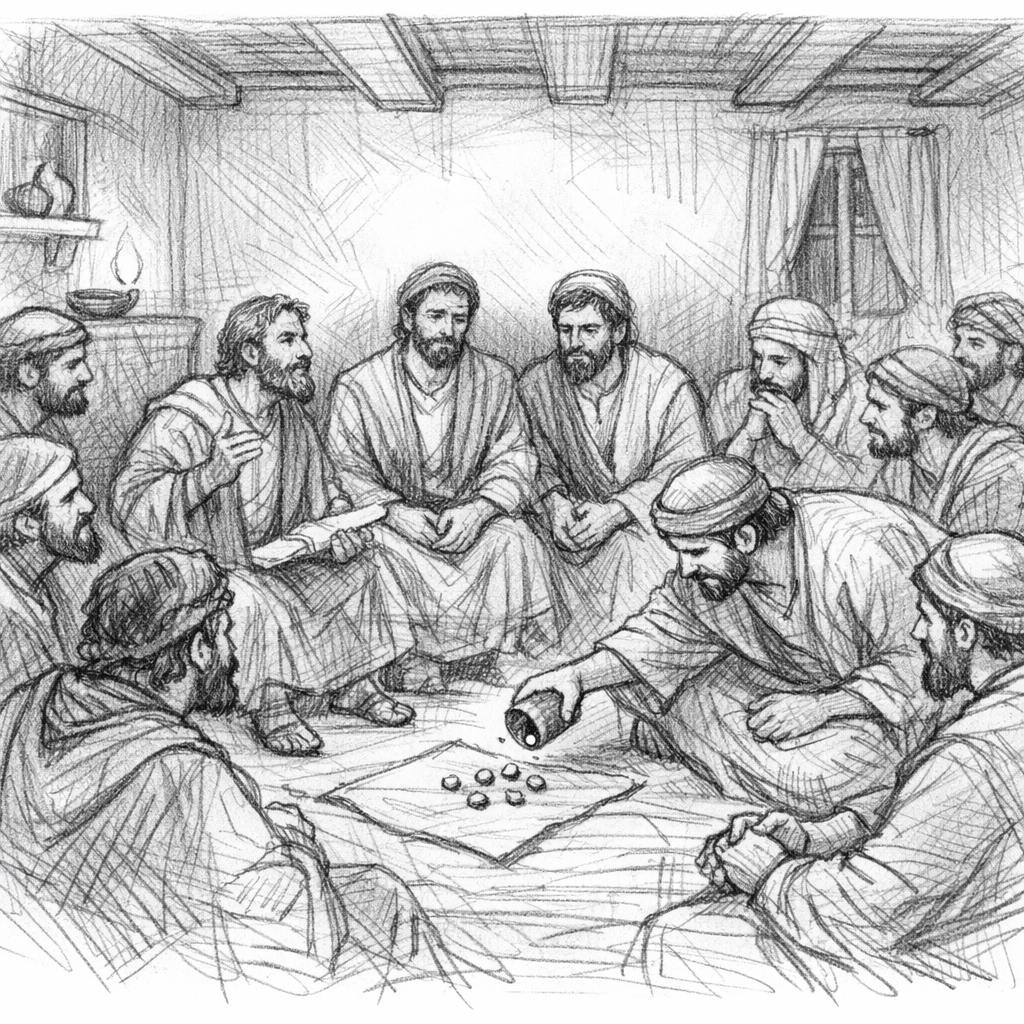
Unity in prayer is portrayed as the disciples, along with women, Mary (Jesus’ mother), and His brothers (120 believers total) devote themselves “with one accord” in the upper room (Acts 1:14). This collective devotion builds harmony, aligning soul faculties for shared purpose. Tying back to John 17:20-26, where Jesus extends His prayer to all future believers for oneness that convinces the world of God’s sending, Acts 1 shows prayer as the human connection to our Heavenly Father. For instance, after Peter steps up in leadership (more on that next), they pray before casting lots to choose Matthias to replace Judas from two potential men, restoring the twelve (Acts 1:21-26). Casting lots which I found is an an ancient method of discerning God’s will via random selection (e.g., drawing marked stones); their way of surrendering human bias to divine wisdom, ensuring impartiality. Repeated words like “Holy Spirit” (four times) and “Jerusalem” (six times) emphasize this preparatory hub: prayer in the city of peace radiates outward witness (Acts 1:8). Prayer fosters the idea of eternal life as union with God, much like John’s theme of indwelling love (John 17:26). Today, this invites us to pray in community; whether in groups, families, or online circles. Shared prayer resolves conflicts, invites guidance, and amplifies energy. What group decisions have you made through unified prayer?
Cornerstone 3: Natural Leadership Emerging
Peter, embodying faith, naturally rises to lead amid the waiting (Acts 1:15). He addresses Judas’ betrayal and suicide (in the “field of blood,” Akeldama, near Jerusalem) and guides the group to restore balance by selecting Matthias. This leadership mirrors John’s unity prayer: just as believers are to be “in us” (John 17:21), Peter’s role unites the group under divine order. Acts 1:8 outline the mission of the 12 after they receive the Holy Spirit, they are to be empowered witnesses from Jerusalem to the ends of the earth: showing leadership directs collective energy. In our lives, this means allowing inner faculties like faith to “stand up” in groups. Not everyone leads at once; harmony lets the right voice emerge.
Wrapping It Up: A Call to Spiritual Awakening
Acts Chapter 1, with its Jerusalem-centric events (upper room gatherings, ascension at the Mount of Olives), characters (Jesus, apostles like Peter, Matthias, Mary), and themes of preparation, paints a profound picture: spiritual growth thrives on peaceful waiting, communal prayer, and emergent leadership. Echoing John’s vision of divine oneness, it sets the stage for Pentecost’s fire and our own inner revival. What resonates with you? Have these principles shown up in your life? I’d love to hear your thoughts: drop a comment below and share your experiences.